
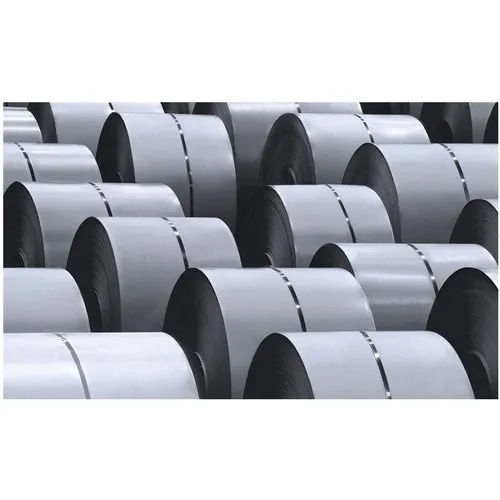
JSW Steel Hot Rolled Coils
Product Details:
- Material Steel
- Size Various available
- Grade Industrial
- Hardness Rigid
- Application Industrial, Construction
- Warranty Yes
- Click to View more
JSW Steel Hot Rolled Coils Price And Quantity
- 1 Metric Ton
JSW Steel Hot Rolled Coils Product Specifications
- Various available
- Industrial, Construction
- Industrial
- Steel
- Yes
- Rigid
JSW Steel Hot Rolled Coils Trade Information
- Cash in Advance (CID)
- 5000 Metric Ton Per Month
- 7 Days
- All India
Product Description
JSW Steel Hot Rolled Coils are versatile, high-strength steel products used in various industries. Made from high-quality carbon steel, they come in grades like HSLA, Weather Resistant, and Chequered Plates. Types include re-rolling, drawing, and line pipes. Used in automotive, construction, energy, and machinery sectors, these coils are essential for manufacturing pipes, tubes, pressure vessels, and more. Fabrication involves advanced tools like plate rolling machines and CNC cutters. Offering superior strength and durability, they enhance performance, reduce maintenance, and ensure cost-efficiency in industries such as oil & gas and automotive.
Product details
|
Usage/Application |
Pipes & Tubes, Automotive, Capital Goods, Energy, Construction & Infra, Pressure Vessels, Machinery |
|
Material |
Steel |
|
Grade |
Re-rolling/ Drawing,Chequered Plates,Line Pipe,HSLA,Weather Resistance Grades |
|
Packaging Type |
1-2 Circumferential and 2 to 4 bands through the eye or as agreed |
|
Brand |
JSW |
|
Thickness |
up to 25.4 mm |
|
Application |
Oil & Gas Industry, Automobile Industry, Construction |
|
Coil OD |
2100 mm Max |
|
Coil Weight |
up to 36 mt |
|
Edge |
Mill Edge |
|
Coil ID |
762 (+/- 40) mm |
|
Width |
up to 2050 mm |
|
Tongue/fish Tail |
80% of coils 500 mm max each end and 20% coils 1000 mm max or as agreed. |
High-Quality Manufacturing Standards
JSW Steel Hot Rolled Coils are crafted using advanced technologies to deliver consistent mechanical properties and surface finish. Each coil undergoes strict quality checks, ensuring compliance with industrial standards. This commitment to quality guarantees performance in demanding applications such as construction and heavy manufacturing.
Versatile Applications Across Industries
The coils find wide utility in sectors like infrastructure development, machinery fabrication, and automotive manufacturing. Their robust nature and available size variations make them adaptable for framing, structural supports, shipbuilding, and more. With these coils, industries can achieve precise engineering requirements without compromising durability.
FAQs of JSW Steel Hot Rolled Coils:
Q: How are JSW Steel Hot Rolled Coils manufactured?
A: JSW Steel Hot Rolled Coils are produced by heating steel slabs at high temperatures and then rolling them to the desired thickness. This process enhances their structural strength and ensures uniform properties throughout the coil, making them suitable for heavy industrial applications.Q: What sizes are available for JSW Hot Rolled Coils, and are they customizable?
A: A variety of sizes are available to accommodate different industrial and construction needs. Customization options may be provided upon request, depending on specific project requirements. Please contact the manufacturer or supplier in India for detailed sizing information and special requests.Q: When should JSW Steel Hot Rolled Coils be used in construction projects?
A: These coils are most beneficial when high strength and rigidity are required, such as in load-bearing structures, frames, or infrastructure components. Their durability and mechanical properties make them ideal for challenging applications where long-term performance is essential.Q: Where can I purchase JSW Steel Hot Rolled Coils in India?
A: You can purchase these coils directly from JSW Steel or through authorized distributors and suppliers across India. Major industrial and construction material suppliers typically stock these products, ensuring widespread availability.Q: What is the process of installing JSW Hot Rolled Coils in industrial projects?
A: Installation involves uncoiling and either cutting or shaping the steel to fit the project specifications. The coils are then welded, bolted, or fabricated into structures as needed. It is recommended to follow standard engineering practices during handling and installation for optimal safety and performance.Q: How can these hot rolled coils benefit my industrial operation?
A: Utilizing JSW Steel Hot Rolled Coils can improve operational efficiency due to their high strength, rigidity, and reliability. They reduce downtime for repairs and replacements, help ensure the structural safety of constructions, and offer long-term savings through their robust and warrantied performance.
Price:
- 50
- 100
- 200
- 250
- 500
- 1000+


 Send Inquiry

- JSW Centre, Bandra Kurla Complex, Bandra (East),Mumbai - 400051, Maharashtra, India
- Phone : 08045478484
GST : 27AAACJ4323N2ZF

- Mr Samarth Rode
- Mobile : 08045478484
- Send Inquiry
- Toll Free No: 1800 225 225
 Send Inquiry
Developed and Managed by Infocom Network Private Limited.


 English
 Spanish
 French
 German
 Italian
 Chinese (Simplified)
 Japanese
 Korean
 Arabic
 Portuguese